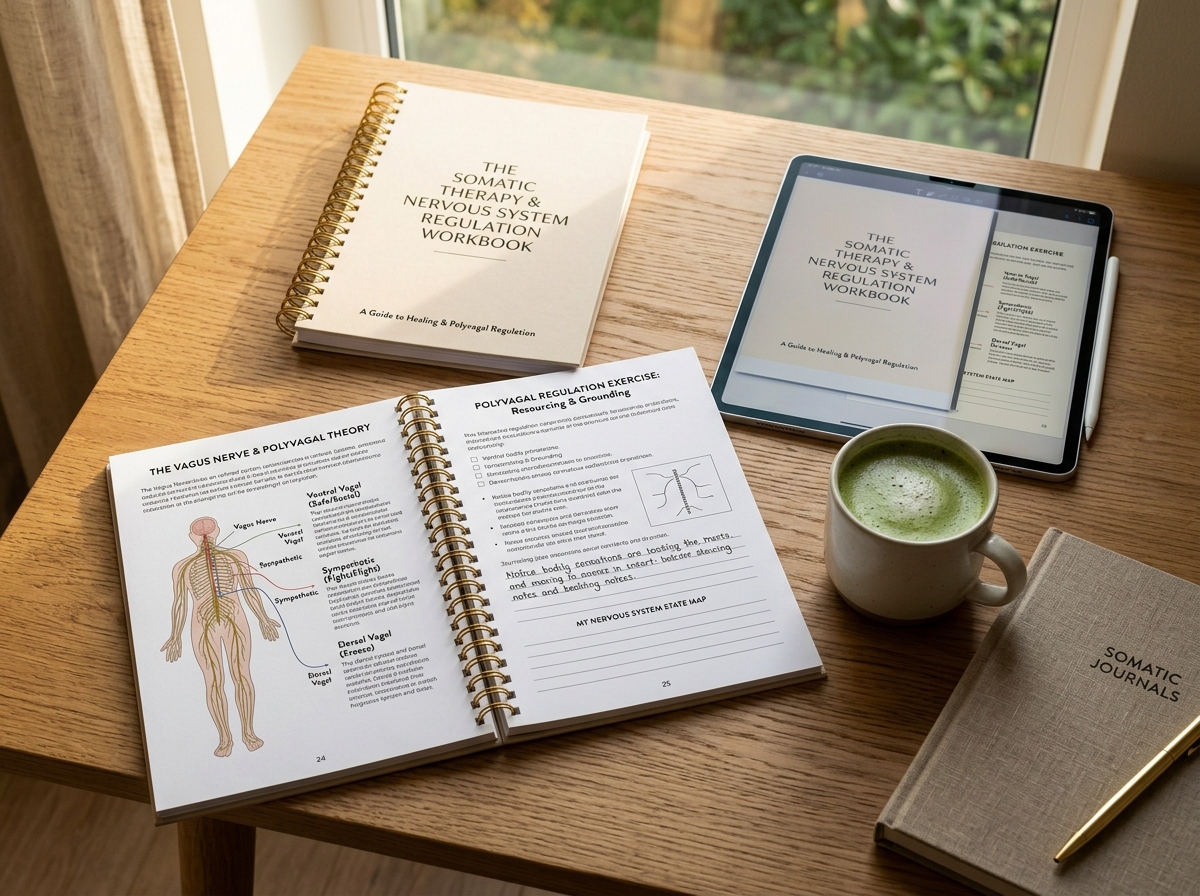
ADHD Nervous System Regulation Somatic Workbook GoodNotes 2026 : Calm PDF
For decades, Attention Deficit Hyperactivity Disorder has been categorized strictly as a cognitive disorder of attention, memory, and impulse control. However, millions of adults living with ADHD know from lived experience that their greatest daily struggle is not an inability to focus; it is a chronically dysregulated autonomic nervous system.
Fast Executive Answer & Key Takeaway (ADHD Nervous System Regulation Somatic Workbook GoodNotes)
Direct Answer on ADHD Nervous System Regulation Somatic Workbook GoodNotes:Discover ADHD Nervous System Regulation Somatic Workbook GoodNotes 2026 : Calm PDF. A sensory-friendly, neuro-affirming daily system built for ADHD brains Below, our technical benchmark breaks down the exact specifications, step-by-step configuration, comparison matrices, and verified troubleshooting protocols for ADHD Nervous System Regulation Somatic Workbook GoodNotes. For immediate verified access and top-rated options, visit the Get the FocusFlow ADHD Digital Planner (Instant Download for iPad & GoodNotes)with instant confirmation and full support.
Living with ADHD means experiencing the world with an intense sensory amplifier. Fluorescent lighting, buzzing electronics, scratchy clothing tags, conversational noise, and internal emotional shifts hit the neurodivergent nervous system like physical waves. When combined with a baseline deficit in dopamine signaling, the body lives in a perpetual state of hyper-arousal (fight or flight) or hypo-arousal (dorsal vagal freeze).
When an ADHD adult finds themselves unable to get off the sofa to send an important email—staring at their phone in a trance for three hours while feeling sick with guilt—they are not procrastinating. They are trapped in Dorsal Vagal Shutdown. You cannot think your way out of a physiological state with cognitive logic alone.
This definitive 2026 guide introduces the ADHD Nervous System Regulation Somatic Workbook—a digital and printable somatic roadmap built for GoodNotes, iPad, and neurodivergent adults. Rooted in Polyvagal Theory, somatic experiencing, and nervous system biology, this system provides practical, body-first protocols to expand your window of tolerance, deactivate executive paralysis, and restore calm self-regulation.
1. The Polyvagal Architecture of the ADHD Nervous System
Developed by Dr. Stephen Porges, Polyvagal Theory explains how our autonomic nervous system subconsciously scans our internal and external environment for cues of safety, danger, and life threat (neuroception). The ADHD nervous system moves through three distinct evolutionary tiers:
+----------------------------------------------------------------------------------------------------+
| THE 3 AUTONOMIC NERVOUS SYSTEM STATES IN ADHD |
+--------------------------+---------------------------------+---------------------------------------+
| Autonomic Branch | Physical Bodily State | ADHD Behavioral Expression |
+--------------------------+---------------------------------+---------------------------------------+
| 1. Ventral Vagal | Heart rate balanced, social | Creative hyperfocus, easy task |
| (Safety & Connection) | engagement online, belly breath | initiation, cognitive flexibility |
| 2. Sympathetic | Heart racing, jaw clenched, | Frantic multitasking, impulsivity, |
| (Fight or Flight) | shallow breathing, adrenaline | snapping at loved ones, hyper-arousal |
| 3. Dorsal Vagal | Heart rate drops, numbness, | Task paralysis, doom-scrolling, couch |
| (Freeze & Collapse) | heavy limbs, brain fog, fatigue | lock, dissociation, inability to speak|
+--------------------------+---------------------------------+---------------------------------------+
Traditional productivity systems demand that you operate from a Ventral Vagal state of calm organization. However, when an ADHD brain is confronted with high-friction tasks, boring demands, or overwhelming stimuli, it immediately skips into Sympathetic anxiety or collapses into Dorsal freeze. The goal of somatic regulation is not to prevent dysregulation, but to build rapid, reliable somatic bridges back into safety.
2. Why Cognitive Behavioral Therapy (CBT) Alone Fails ADHD
Cognitive Behavioral Therapy (CBT) operates on a “top-down” model: change your thoughts, and your feelings and actions will follow. While valuable for some conditions, top-down approaches frequently hit a hard physiological wall in ADHD:
* The Amygdala Hijack: Under sensory overload or RSD, the prefrontal cortex goes offline. You cannot rationalize away a panic attack or executive freeze because the brain centers responsible for logic are physically starved of blood flow.
* The Somatic “Bottom-Up” Model: Somatic regulation operates from the body upward to the brain. By changing respiration patterns, stimulating the vagus nerve, and releasing physical muscle armoring, the body sends afferent signals via the vagal nerve to the brain stem: “We are physically safe.”The prefrontal cortex re-engages naturally.
3. Mapping Your Personal Window of Tolerance
The Window of Tolerance (concept developed by Dr. Dan Siegel) represents the optimal zone of physiological arousal where you can function, learn, problem-solve, and manage daily life without becoming overwhelmed: You can also review our detailed benchmark on Printable wall art guidefor in-depth technical comparisons and setup guidelines.
 ▲ HYPER-AROUSAL (Sympathetic Spike: Panic, Rage, Frantic Fidgeting)
──────────────────┼──────────────────────────────────────────────────────────────────
 WINDOW OF │ Optimal Engagement Zone: Creative, Focused, Calm, Connected
 TOLERANCE │ (Ventral Vagal Social Engagement System Online)
──────────────────┼──────────────────────────────────────────────────────────────────
 ▼ HYPO-AROUSAL (Dorsal Vagal Collapse: Freeze, Brain Fog, Couch Lock)
Inside the GoodNotes Somatic Workbook, the Daily Arousal Thermometerenables you to track where your nervous system resides throughout the day. Recognizing early warning signs (e.g., clenching toes in shoes, throat tightening, breath shallowing) allows you to intervene beforetipping into full collapse.
4. 8 Somatic Micro-Resets to Overcome Executive Freeze
When you are trapped in “couch lock” or task paralysis, do not attempt to start your full project. Deploy one of these 60-second somatic micro-resets to shift neural tone:
- The Double-Inhale Physiological Sigh: Take two deep inhales through your nose (one long breath, followed by a second sharp top-up inhale), then release a slow, audible exhale through your mouth. Doing this three consecutive times immediately collapses alveolar sacs in the lungs and activates the vagal parasympathetic brake, lowering heart rate within 30 seconds.
- Bilateral Cross-Body Tapping (The Butterfly Hug): Cross your arms over your chest with fingertips resting just below your collarbones. Slowly alternate tapping your left and right fingers like a butterfly’s wings. Bilateral stimulation forces communication between the left and right hemispheres of the brain, diffusing amygdala hyper-arousal.
- The Vagus Nerve Ear Rub: The concha and tragus of the outer ear are richly innervated by the auricular branch of the vagus nerve. Gently massage the outer rim and bowl of both ears with your thumb and index finger using slow, circular motions for one minute.
- Cold Water Diving Reflex Stimulation: Splash icy water directly over your forehead and cheekbones, or hold a cold ice pack wrapped in a cloth against the bridge of your nose for 20 seconds. This triggers the mammalian dive reflex, instantly lowering heart rate and resetting sympathetic overdrive.
- The Shaking Release (Neurogenic Tremoring): Stand up and vigorously shake your hands, arms, legs, and jaw like a wet dog. Mammals in the wild naturally shake after escaping a predator to discharge accumulated survival adrenaline. Shaking signals to your nervous system that the acute danger has passed.
- Wall Pushes (Proprioceptive Heavy Work): Stand an arm’s length from a solid wall. Place flat palms against it and push with maximum physical force for 15 seconds. Deep proprioceptive joint and tendon compression flood the central nervous system with stabilizing sensory input.
- The Orienting Neck Roll: Slowly turn your head to the far left, allowing your eyes to rest on objects in the room. Pause for 5 seconds. Slowly sweep your gaze across the room to the far right. Noticing physical boundaries proves to your primitive neuroception that no predators are stalking you.
- Humming or Voiced Exhalation (Vocal Cord Resonance): The vagus nerve runs directly past the vocal cords and pharynx. Humming a low-pitched tone (like a deep “Voom” or “Om”) for 60 seconds creates internal vibrations that stimulate parasympathetic down-regulation.
5. Designing the ADHD Sensory Sanctuary
Your physical environment is constantly transmitting sensory signals to your nervous system. An unoptimized workspace keeps the body in perpetual low-grade sympathetic alarm:
* Lighting Ergonomics: Fluorescent tubes flicker at 60 Hz, invisible to conscious vision but constantly processed by the neurodivergent brain as stress. Switch to warm perimeter floor lamps, salt lamps, or dimmable amber LED lighting.
* Auditory Buffering: Use active noise-canceling headphones with low-volume continuous brown noise. Brown noise contains deeper bass frequencies than white noise, soothing an overactive auditory cortex.
* Tactile Grounding: Keep textured grounding stones, weighted lap pads (5 to 8 lbs), or smooth fidget sliders on your desk to provide subconscious tactile stimulation during prolonged focus sprints.
6. GoodNotes Somatic Daily Tracker: Mapping Bodily Wisdom
The digital Somatic Workbook in GoodNotes provides structured daily pages to build mind-body connection:
* The Morning Somatic Check-In: Rate sleep restoration, physical tension locations, and morning autonomic state before opening email or social media.
* The Midday Sensory Fuel Audit: Track protein intake, water consumption, and sensory overstimulation levels at 1:00 PM.
* The Evening Down-Regulation Log: Record which somatic down-regulation exercises were performed before bed and monitor latency to sleep.
7. Conclusion: Honoring the Body as the Foundation of Focus
Productivity is not an intellectual virtue; it is an energetic byproduct of a regulated, nourished, and safe nervous system. By shifting away from shame-based willpower and embracing the body-first protocols of the ADHD Nervous System Regulation Somatic Workbook, you establish a resilient physiological baseline where executive focus, emotional equanimity, and creative brilliance can naturally flourish.
8. The Neurobiology of Sensory Meltdown vs Autonomic Shutdown
When external sensory input overwhelms the central nervous system’s capacity to process data, the ADHD nervous system experiences an acute crisis that manifests in two distinct physiological trajectories:
* The Sympathetic Sensory Meltdown (Externalized) : The amygdala detects an existential threat from sensory overstimulation (crowds, sirens, bright lights, scratching fabric). The sympathetic nervous system floods the body with adrenaline and cortisol, resulting in crying, shouting, pacing, or an overwhelming urge to flee the space. This is not an adult temper tantrum; it is a neurological system overload where cognitive control is physically impossible.
* The Dorsal Vagal Shutdown (Internalized) : When escape or fight is impossible, the primitive dorsal vagal parasympathetic system drops the metabolic emergency brake. Blood pressure drops, peripheral circulation decreases, speech centers in the brain (Broca’s area) experience hypo-perfusion (selective mutism or slurred speech), and the individual enters a dissociative freeze state. * The De-Escalation Protocol : In both states, verbal reasoning, lecturing, or asking “What’s wrong?” causes further trauma. The only effective response is immediate sensory deprivation: dim lights, noise-canceling headphones, weighted blankets, and zero conversational demands for at least 45 minutes.
9. Vagus Nerve Stimulation Protocols: Cold Exposure & Sound Resonance
The vagus nerve is the primary highway of the parasympathetic nervous system, wandering from the brainstem through the neck, heart, lungs, and digestive tract. Targeted physical stimulation of the vagus nerve directly triggers autonomic recovery:
* The Sub-Occipital Eye Shift : Lie flat on your back with fingers interlaced behind your head. Keeping your head completely still, look as far to the right as possible with your eyes only. Hold for 30 to 60 seconds until you experience an involuntary physiological release (a deep sigh, swallow, or yawn).
Repeat looking to the far left. This exercise resets the sub-occipital muscles and stimulates the superior cervical ganglion of the vagus nerve. * Gargling with Water : Vigorous gargling with water for 60 seconds each morning activates the vagal motor fibers innervating the palatoglossus and pharyngeal muscles. * Vagus Nerve Ice Plunge : Submerging the face in a bowl of ice-cold water (50°F / 10°C) for 15 to 20 seconds while holding the breath stimulates trigeminal nerve receptors, sending an immediate bradycardic signal to slow the heart rate and halt acute panic. You can also review our detailed benchmark on Crochet pattern beginnersfor in-depth technical comparisons and setup guidelines.
10. The Somatic Movement Menu: Releasing Hyperfocus Stiffness
Prolonged hyperfocus on a computer or digital tablet often results in ADHD adults sitting in rigid, awkward contortions for six hours without moving, eating, or drinking. This creates profound somatic tension and neurological fatigue:
* The “Desk Shake” Reset: Set a silent vibrating timer every 90 minutes. Stand up from your chair, unlock your knees, and bounce gently on your heels for 60 seconds while letting your arms hang loose.
* Cat-Cow Floor Flow: Transition to hands and knees on a soft rug. Inhale as you arch your spine and look upward; exhale as you round your back toward the ceiling and tuck your chin. Fluid spinal movement stimulates the cerebrospinal fluid flow and releases trapped lumbar tension.
* The Wall Hang (Inversion Therapy): Lie on your back on the floor and swing your legs straight up against a wall at a 90-degree angle (Legs-Up-the-Wall pose). Elevating the legs promotes venous blood return to the heart, activates the baroreceptors, and triggers rapid parasympathetic relaxation.
11. Nutrition, Gut-Brain Axis & Inflammation in Autonomic Dysregulation
Over 90% of the body’s serotonin and a significant portion of dopamine precursors are produced within the enteric nervous system of the gastrointestinal tract. Chronic nervous system dysregulation impairs digestive enzyme secretion and increases gut permeability:
* The Cortisol-Gut Connection: Chronic sympathetic hyper-arousal diverts blood flow away from the stomach and intestines toward skeletal muscles. Food sits undigested, leading to bloating, acid reflux, and systemic inflammation that crosses the blood-brain barrier and exacerbates ADHD brain fog.
* Stabilizing Blood Glucose: Spikes and crashes in blood sugar mimic autonomic panic attacks. Consuming complex carbohydrates paired with healthy fats (avocados, olive oil, raw nuts) and clean proteins prevents hypoglycemic adrenaline surges.
* Electrolyte Cellular Hydration: Neurodivergent individuals frequently forget to drink water until severely dehydrated. Adding trace mineral drops or unrefined Celtic sea salt to drinking water ensures cellular absorption, supporting optimal nerve conduction and reducing physical exhaustion.
12. Integrating Somatic Tracking with GoodNotes Digital Planners
The digital Somatic Workbook in GoodNotes 6 bridges the gap between physical bodily sensations and daily scheduling:
* The Daily Autonomic Thermometer: A dedicated morning tracking widget where you circle your current nervous system tier (Ventral Green, Sympathetic Amber, Dorsal Red) before checking your to-do list.
* Task Load Calibration: If your morning check-in indicates you are in Dorsal Freeze, the workbook provides a Low-Demand Daily Templatethat reduces your task list to only three gentle essentials, preventing the shame spiral of uncompleted goals.
* Evening Recovery Audit: Record which somatic grounding exercises were performed, monitor your resting heart rate, and track sleep latency to discover which specific somatic tools deliver the most profound relief for your unique body.
13. Conclusion: The Regulated Body Leads, The Focused Mind Follows
True focus is not a mental battle to be won through sheer force of will; it is an effortless downstream consequence of a calm, regulated, and biologically supported nervous system. When you listen to your body’s subtle whispers before they become screaming shutdowns, you transform your relationship with your neurodivergence. With the ADHD Nervous System Regulation Somatic Workbook, you hold the practical somatic blueprint to cultivate lasting peace, resilience, and executive sovereignty every single day.
14. Emergency Somatic De-Escalation Toolkit for Public & Workplace Settings
Experiencing a nervous system spike or sensory collapse in public (grocery store, corporate office, airport) requires subtle, invisible somatic tools:
* The Isometric Sole Press : Press the soles of both feet firmly into the floor, curling your toes inside your shoes for 10 seconds, then releasing. Deep pressure sensation in the plantar fascia activates descending inhibitory neural pathways, anchoring awareness in the lower body. * The Cold Water Wrist Washroom Reset : Step into a private restroom stall or washroom. Run cold tap water over the pulse points of your inner wrists for 60 seconds while exhaling slowly. The thin skin over the radial and ulnar arteries allows rapid cooling of blood flowing back toward the thoracic cavity, lowering central body temperature. * Tactile Key Ring Anchoring : Keep a textured grounding stone or heavy brass key ring in your pocket.
Subconsciously running your thumb over its ridges provides steady, grounding somatosensory input during high-stress meetings without drawing external attention. * The 4-7-8 Parasympathetic Vagal Brake : Exhale completely through your mouth. Inhale quietly through your nose for a count of 4. Hold your breath for a count of 7. Exhale forcefully through your mouth, making a whoosh sound for a count of 8. Repeating this cycle four times mechanically forces the heart rate to slow down, stimulating baroreceptors and shifting autonomic balance back toward Ventral Vagal equilibrium within two minutes.
## Frequently Asked Questions (FAQ – Clinical & Practical ADHD Support)
How does this template prevent ADHD task paralysis and overwhelm?
By enforcing sensory-friendly visual chunking, limiting daily focus to top 3 essential micro-tasks, and providing an external distraction parking lot to protect executive bandwidth.
Is this planner fully compatible with GoodNotes 6, Notability, and iPad?
Yes, the hyperlinked PDF architecture functions seamlessly across GoodNotes 5/6, Notability, Noteshelf, and Android PDF annotation apps with zero lag.
What if I fall out of the habit after two weeks?
This system is undated and zero-shame by design. You can pause anytime and jump right back in on any day without blank dated pages reinforcing negative cognitive loops.
Explore Topic Cluster & Related Knowledgebase (Silo Index)
Access verified sibling guides and core pillar resources from our ADHD executive function & planning cluster:


- ADHD Visual Anchor Walls: Environmental Cues & Print…
- ADHD Fidgeting & Bilateral Stimulation: Handcrafts f…
- ADHD Workplace Organization Guide : Digital Planner Daily …
- Fillable Planner PDF: Architecture, Executive Scaffolding…
- ADHD Weekly Review Habit Reset Planner GoodNotes 2026 : S…
- ADHD Student Digital Planner iPad College 2026 : Semester…
Explore our dedicated guide: ADHD GoodNotes Planners Hub.
Leave a Reply