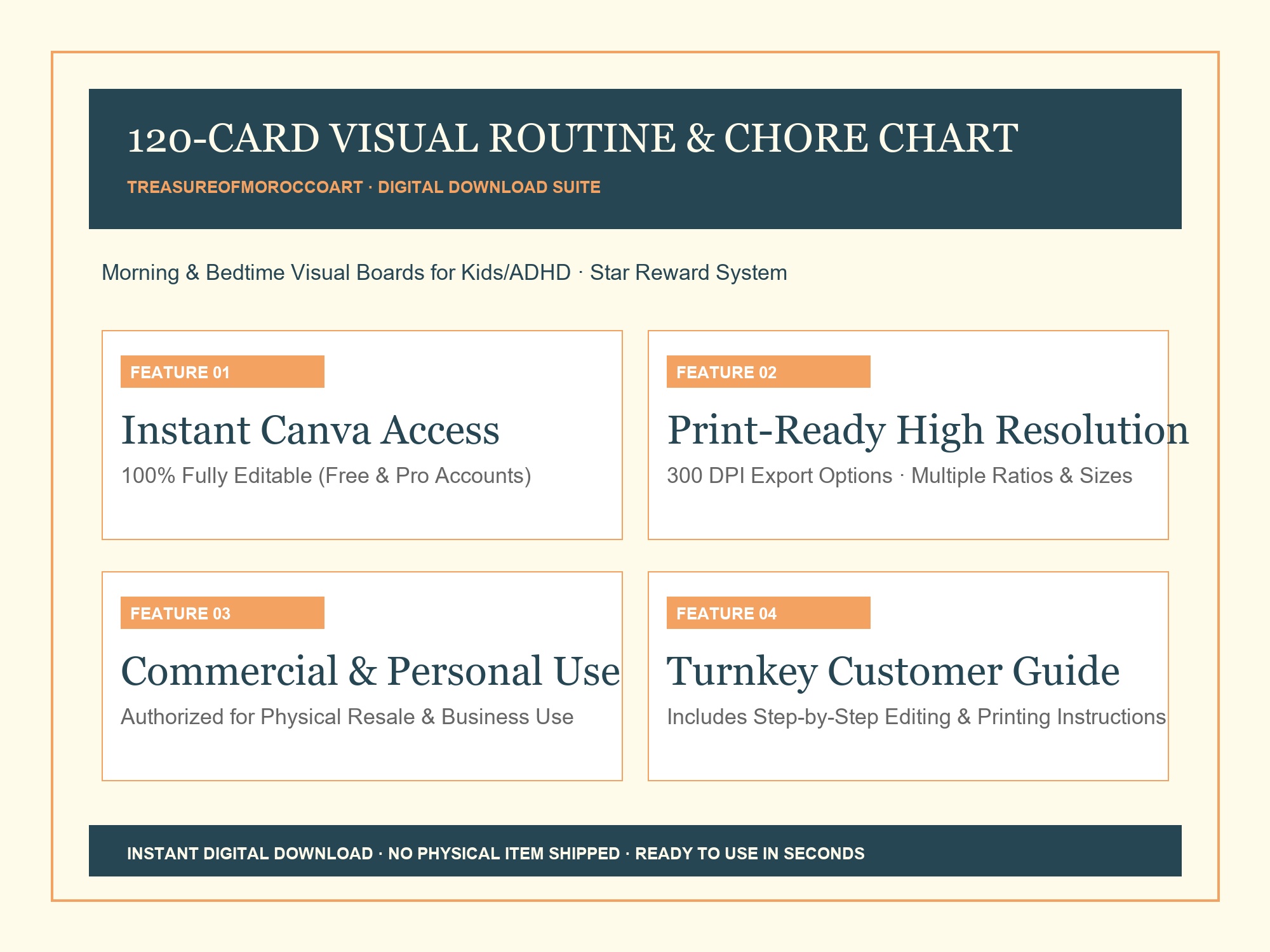
ADHD Kids Daily Visual Routine & Chore Chart GoodNotes 2026 : Fun PDF
Getting any child to complete household chores requires patience, but asking a child with Attention Deficit Hyperactivity Disorder (ADHD) to “clean their room” is practically a recipe for tears, paralysis, and household conflict. When faced with a vague, multi-step instruction, the ADHD brain does not see a clear path forward; it experiences an avalanche of sensory details, working memory overload, and immediate executive freeze.
Fast Executive Answer & Key Takeaway (ADHD Kids Daily Visual Routine)
Direct Answer on ADHD Kids Daily Visual Routine:Discover ADHD Kids Daily Visual Routine & Chore Chart GoodNotes 2026 : Fun PDF. A sensory-friendly, neuro-affirming daily system built for ADHD brains to o Below, our technical benchmark breaks down the exact specifications, step-by-step configuration, comparison matrices, and verified troubleshooting protocols for ADHD Kids Daily Visual Routine. For immediate verified access and top-rated options, visit the Get the FocusFlow ADHD Digital Planner (Instant Download for iPad & GoodNotes)with instant confirmation and full support.
Ten minutes after being told to tidy up, the child is often discovered sitting on the floor in a trance, deeply hyperfocused on an old toy discovered under the bed, while the clothes and books remain completely scattered. The parent perceives this as defiance or laziness. In reality, it is a clinical manifestation of executive dysfunction, task atomization failure, and deficient internal dopamine signaling.
This definitive 2026 guide introduces the ADHD Kids Daily Visual Routine & Chore Chartframework—a fun, interactive system built for digital tablets (GoodNotes, iPad, Notability) and printable magnetic stations. By breaking nebulous chores into micro-actions, introducing visual accountability, and providing real-time dopamine reinforcement, this system turns daily household contributions into an engaging, empowering game for neurodivergent children.
1. Why Traditional Chore Systems Fail the ADHD Child
Standard chore charts rely on three neurotypical assumptions that directly contradict ADHD neurobiology:
+----------------------------------------------------------------------------------------------------+
| WHY TRADITIONAL CHORES PARALYZE THE ADHD BRAIN |
+--------------------------+---------------------------------+---------------------------------------+
| Neurotypical Expectation | ADHD Cognitive Reality | Systemic Breakdown |
+--------------------------+---------------------------------+---------------------------------------+
| 1. "Clean your room" is a| Brain sees 147 separate objects | Executive paralysis; total overwhelm; |
| single simple command | with no priority ranking | child shuts down or avoids |
| 2. Delayed reward | "Later" does not exist in ADHD; | Zero dopamine motivation; chores feel |
| (Allowance on Sunday) | only "NOW" and "NOT NOW" exist | like unpaid, punitive labor |
| 3. Internal motivation | Deficient dopamine transporter | Pure boredom triggers physical sensory|
| drives follow-through | function makes routine painful | discomfort and active rebellion |
| 4. Auditory reminders | Working memory hold time is | Verbal nagging is perceived as hostile|
| reinforce memory | under 10 seconds under distraction| emotional noise; sparks RSD |
+--------------------------+---------------------------------+---------------------------------------+
When you transform chores into visual, atomized, gamified micro-tasks, you remove the cognitive burden of organizing the chaos. The visual chart answers the three questions an ADHD brain cannot ask itself: Where do I start? What does ‘done’ look like? What reward do I get right now?
2. The 3-Tier Chore Atomization Framework
The secret to eliminating chore paralysis is Task Atomization—the science of reducing an abstract chore into concrete, 3-minute physical actions that require zero executive decision-making. Optimizing ADHD Kids Daily Visual Routine remains a core benchmark across this protocol.
[Abstract Chore: "Clean Bedroom"] ──► ATOMIZED INTO ──► 1. Pick up dirty clothes (into blue hamper)
 ──► 2. Stack books on the shelf
 ──► 3. Put all Legos into yellow bin
 ──► 4. Pull blanket straight on bed
The Rule of Color-Coded Zones
Assign each chore to a specific, color-coded physical container or zone:
* The “One-Category” Rule: Never say “Put your toys away.”Say: “Find 5 stuffed animals and toss them into the green basket.”Limiting the search parameter to a single category enables the child’s selective attention to filter out the rest of the room.
* The “Clear the Floor” Sprint: Floor clutter creates intense visual overstimulation. Setting a visual timer for 3 minutes to clear the floor immediately restores mental calm.
* The Binary Done State: Provide photographic proof of what “done” looks like. In the GoodNotes chore planner, paste a photograph of the clean shelf right next to the checklist card.
3. Designing a Gamified Visual Daily Routine in GoodNotes
Digital planners in GoodNotes 6 revolutionize chore tracking for kids by combining tactile feedback with gaming psychology:
| Feature in GoodNotes 6 | Implementation Strategy | Psychological Impact on Child |
|---|---|---|
| Interactive Checkboxes | Child uses Apple Pencil or finger to tap custom colorful checkboxes. | Physical motor interaction provides immediate tactile closure. |
| Digital Sticker Rewards | Collectible digital monster, superhero, or animal stickers awarded per chore. | Taps into the collector/gamer psychology, providing instant dopamine. |
| Progress Thermometer | A colorful visual bar that fills up as chores are stamped complete. | Provides visual feedback on goal proximity, motivating final effort. |
| Audio Confirmation | Embed a 3-second celebration sound bite or parent voice memo. | Multi-sensory reinforcement cements positive habit loops. |
| Zero-Mess Reset | Sunday evening template duplicate button resets the week in 2 seconds. | Eliminates the visual stress of crossed-out paper errors. |
4. The Token Bank: Linking Chores to Immediate Dopamine
An ADHD child cannot stay motivated for a weekly allowance. Their dopamine reward cycle operates on a rapid feedback loop. To establish lasting consistency, implement a Daily Token Bank:
[Completed Micro-Chore] ──► [Instant Token Earned (1-3 Coins)] ──► [Daily Reward Redemptions]
The Neurodivergent Token Menu:
- Low-Cost Immediate Rewards (1 – 3 Tokens):
- 15 minutes of video game or tablet time
- Choosing the bedtime storybook
- Picking the family car playlist on the ride to school
- Medium Cumulative Rewards (10 – 15 Tokens):
- Staying up 20 minutes past normal bedtime on Friday
- Choosing Friday family dinner or dessert
- Baking cookies with a parent
- Major Milestone Rewards (30+ Tokens):
- A trip to the science museum, zoo, or bowling alley
- Choosing a new small toy or Lego set
- A 1-on-1 “special day” with Mom or Dad
Critical Rule: Never deduct chore tokens as a punishment for behavioral issues, emotional meltdowns, or academic struggles. Chore systems measure household contributions; using them as disciplinary leverage destroys their motivational efficacy.
5. Body Doubling: The Secret Weapon for Chore Follow-Through
Body Doubling is a proven ADHD productivity technique where the physical presence of another person serves as an anchor, keeping the ADHD brain grounded in the present task.
When your child needs to tackle their daily chore list:
1. Never Shout Chores from Another Room: Calling out instructions from the kitchen while your child is in their bedroom guarantees immediate failure.
2. Be the Silent Anchor: Sit quietly in the child’s room with a book, a laptop, or your own folding laundry. You do not need to do their chore for them; your calm physical presence regulates their nervous system and prevents attention drift.
3. Use the “Do One, I Do One” Protocol: For overwhelming messes, alternate items: “You pick up one sock, and I’ll pick up one sock. Let’s see who finishes their pile first!”
6. Daily Chore Allocations by Age and Executive Capability
Chore expectations must align with executive function development, which is typically delayed by 30% in children with ADHD: Optimizing ADHD Kids Daily Visual Routine remains a core benchmark across this protocol.
+----------------------------------------------------------------------------------------------------+
| EXECUTIVE-ALIGNED CHORE MATRIX FOR ADHD CHILDREN |
+--------------------------+---------------------------------+---------------------------------------+
| Age Group (Chronological)| Target Executive Chores | Visual Representation Required |
+--------------------------+---------------------------------+---------------------------------------+
| Ages 4 - 6 (Early Years) | Put shoes in basket; wipe spill | Large laminated photo cards with |
| | with cloth; feed family pet | Velcro; single chore at a time |
| Ages 7 - 9 (Elementary) | Clear dinner plate; sort socks; | GoodNotes icon checklist; 5-minute |
| | empty bedroom trash can | sand timer for task pacing |
| Ages 10 - 13 (Tweens) | Empty dishwasher; load washing | Digital iPad planner; multi-step |
| | machine; vacuum bedroom rug | checklists; weekly reward bank |
| Ages 14+ (Teens) | Prepare simple lunch; take out | Shared mobile calendar sync; financial|
| | recycling; fold personal laundry| or autonomy privilege rewards |
+--------------------------+---------------------------------+---------------------------------------+
7. Sensory Ergonomics: Tailoring Chores to Sensory Preferences
Many chore refusals are rooted in unrecognized sensory aversions rather than behavioral disobedience:
* Tactile Aversions: Handling slimy wet dishes, cold textured sponges, or sticky trash bags can trigger intense physical revulsion. Equip the child with bright, cheerful dishwashing gloves or dedicated reacher-grabber tools.
* Auditory Overload: The roar of a vacuum cleaner can physically hurt a child with auditory hypersensitivity. Provide noise-canceling headphones playing upbeat music or podcasts during cleaning tasks.
* Proprioceptive Seeking: Children with hyperactive or sensory-seeking profiles thrive on heavy, gross-motor tasks. Assign them chores involving physical exertion, such as carrying laundry baskets, pushing heavy vacuum cleaners, hauling recycling bins, or moving chairs during floor sweeps.
8. Eliminating Chore Nagging: Externalizing the Parental Voice
The primary relationship casualty of household management is chronic parental nagging. When a parent repeats the same instruction four times, both parent and child experience escalating emotional stress:
* The Rule of Visual Redirection: Whenever you catch yourself about to yell “Take out your backpack!”, pause. Walk over to your child, gently touch their shoulder, point toward the GoodNotes dashboard or wall chart, and ask: “What does your visual chart say is next?”
* The Neutral Arbiter: By positioning the chart as the authority, the parent ceases to be the “nagging villain.” The chart becomes an objective, unemotional roadmap that both parent and child consult together as allies.
9. Sibling Equity: Managing Mixed Neurodivergent Households
Managing chores in a family with both ADHD and neurotypical children requires strategic diplomacy:
* Equity vs Equality: Explain to all children that fairness does not mean identical treatment; it means giving each family member the exact tools they need to succeed. An older neurotypical sibling may fold laundry independently in 10 minutes, while an ADHD sibling requires visual atomization cards and body doubling.
* Collaborative Family Challenges: Shift from individual competition to team accomplishments. Set a family goal where total accumulated tokens unlock a shared weekend pizza party or trampoline park outing. This fosters sibling teamwork rather than score-keeping and resentment.
10. The 5-Minute Chore Speedrun: Gamifying with Music and Timers
ADHD brains respond powerfully to urgent, high-energy gamification. Transforming routine chores into a high-stakes “Speedrun” bypasses executive hesitation:
* The “One-Song Tidy”: Select an upbeat, high-tempo song (such as a 3-minute pop or video game soundtrack). Challenge the child to complete one atomized zone before the final chorus fades.
* Visual Sand & Disc Timers: Digital clock digits lack spatial tangibility for an ADHD child. Use a 5-minute visual Time Timer where a disappearing red disk visually displays the passage of time without inducing auditory ticking panic.
* Beat-Your-Best-Score Tracking: In the GoodNotes chore workbook, record completion times. Celebrating a new personal record of clearing the dinner table in 2 minutes and 45 seconds delivers an immense surge of authentic pride and dopamine. You can also review our detailed benchmark on Printable wall art guidefor in-depth technical comparisons and setup guidelines.
11. Laundry & Wardrobe Atomization: Overcoming the Clothes Mountain
Laundry is one of the highest-friction chores for neurodivergent individuals of any age. The multi-step sequence (sorting, washing, drying, folding, hanging, putting away) overloads working memory and spatial planning:
* The “No-Fold” Hamper System: Eliminate the folding bottleneck completely for everyday play clothes. Provide open cubbies or bins labeled with pictures: one bin for socks, one for underwear, one for shirts, and one for pants. The child simply tosses clean clothes into the appropriate open container.
* The Sock Sorting Game: Turn sock matching into a fast-paced memory game on the rug. Set a visual 2-minute timer and race to see who can make the most pairs.
* Single-Outfit Organizers: Use a hanging 5-shelf closet organizer labeled Monday through Friday. On Sunday, spend 10 minutes filling each shelf with a complete, pre-matched outfit. Daily wardrobe decisions are reduced to zero friction.
12. Mealtime Clean-Up Sprints: From Dinner Table to Dishwasher
Post-dinner transitions are prone to resistance because physical fatigue is setting in after a demanding school day:
* The “Two-Plate Rule”: Instruct the child to carry only two items at a time to the sink. Trying to clear an entire place setting in one trip leads to dropped dishes, spills, and emotional dysregulation.
* Clear Task Specialization: Assign a specific, fixed role so there is no ambiguity. One child is the “Cup Collector,” while another is the “Silverware Sorter.” Specialization removes the executive burden of deciding what to do next.
* Rinse Station Novelty: Give younger children a foaming bubble dish wand or a spray bottle filled with water and gentle dish soap. The sensory tactile fun of creating foam makes wiping down the table engaging rather than tedious.
13. Pet Care Integration: Fostering Empathy and Routine Anchoring
Caring for a household pet is one of the most therapeutically beneficial routines for a child with ADHD. Pets provide unconditional emotional co-regulation and predictable daily anchors:
* Visual Scoop Markers: Mark pet food measuring cups with bright colored tape showing the exact fill line.
* The Feeding Anchor Habit: Anchor pet feeding to a personal habit the child already does reliably: “When I eat breakfast, my dog eats breakfast.”Habit-stacking bypasses time blindness by linking new actions to existing behavioral anchors.
* Checklist Stamping: Include “Fresh Water for Dog” and “Brush Cat for 2 Minutes” on the GoodNotes daily chore page to reinforce that animal care is a valued contribution to family wellness. Optimizing ADHD Kids Daily Visual Routine remains a core benchmark across this protocol.
14. School Bag Decompression & Launchpad Unpacking Ritual
When children return home from school, their executive tank is typically completely empty. Demanding that they immediately unpack their backpack and start homework triggers severe conflict:
* The 30-Minute Sensory Recovery Window: Allow 30 minutes of decompression (snack, movement, zero demands) before initiating the school bag routine.
* The 4-Step Unpack Visual Strip:
1. Open backpack zipper.
2. Put lunchbox and water bottle on the kitchen counter.
3. Place homework folder into the parent signing basket.
4. Hang backpack on the launchpad wall hook.
* Eliminating Lost Papers: Never keep loose papers inside the backpack. Use a single bright plastic accordion folder with dedicated tabs for “Needs Parent Signature” and “Completed Homework.”
15. Printable vs Digital Chore Boards: Which Format Suits Your Home?
Choosing the right format depends on your child’s age, sensory profile, and screen-time philosophy:
* When to Choose Printable Magnetic Charts: Ideal for younger children (ages 3 to 8), high-traffic communal spaces (refrigerator, kitchen entryway), and households committed to strict screen-free daytime hours. Magnetic tiles with physical icons provide rich tactile reinforcement that little hands love to manipulate.
* When to Choose Digital GoodNotes Planners: Perfect for older children, tweens, and teens who value digital devices, personalization, and portability. Digital charts eliminate physical clutter, allow endless template duplication, and integrate seamlessly with school iPad routines.
16. Long-Term Executive Scaffolding: Fading Prompts Toward Autonomy
The ultimate objective of any external scaffolding system is to cultivate internal self-regulation over time:
* Reflective Affirmation: When your child successfully completes a chore without prompting, avoid generic praise (“Good boy”). Instead, validate their internal agency: “I noticed you loaded your plate into the dishwasher without me asking. Look at that clean table—how does it feel to see your space organized?”
* Gradual Prompt Fading: Move from physical hand-over-hand guidance to standing nearby, to pointing at the chart, to verbal nods (“Check your board”), to complete independence where the child consults the board autonomously.
* Normalizing Seasonal Resets: Expect chore compliance to fluctuate during school holidays, illness, or family stress. A lapse is not a permanent failure—it is simply a biological signal to re-anchor the visual board and restore routine predictability with gentle compassion.
17. Neurodivergent Positive Reinforcement Psychology & Self-Esteem Protection
Children diagnosed with ADHD receive an estimated 20,000 more negative feedback messages, reprimands, and corrections than their neurotypical peers by age twelve. Over time, this constant barrage of criticism erodes self-esteem, fuels Rejection Sensitive Dysphoria (RSD), and fosters learned helplessness around household tasks:
* The 5-to-1 Affirmation Ratio : Behavioral pediatric research demonstrates that neurodivergent children require at least five positive reinforcements for every single constructive redirection. When using your GoodNotes chore chart, make a conscious effort to catch your child doing things right. Acknowledge micro-efforts: “I saw you pick up that marker from the rug without being reminded—that showed incredible awareness!”
* Praising the Effort, Not the Outcome : Because ADHD executive functioning fluctuates dramatically based on fatigue and medication levels, praising perfection sets the child up for shame.
Praise the cognitive effort: “I know your brain felt exhausted today, but you pushed through and hung up your jacket anyway. That took serious courage and mental stamina.”
* Protecting the Parent-Child Connection : At the end of the day, no chore or tidy bedroom is worth damaging your relationship with your child. If an evening chore routine is generating tears and panic, hit the pause button. Hold your child, co-regulate their nervous system, and remind them: “You are loved, you are safe, and we will solve this puzzle together tomorrow.”
## Frequently Asked Questions (FAQ – Clinical & Practical ADHD Support)
How does this template prevent ADHD task paralysis and overwhelm?
By enforcing sensory-friendly visual chunking, limiting daily focus to top 3 essential micro-tasks, and providing an external distraction parking lot to protect executive bandwidth.
Is this planner fully compatible with GoodNotes 6, Notability, and iPad?
Yes, the hyperlinked PDF architecture functions seamlessly across GoodNotes 5/6, Notability, Noteshelf, and Android PDF annotation apps with zero lag. Optimizing ADHD Kids Daily Visual Routine remains a core benchmark across this protocol.
What if I fall out of the habit after two weeks?
This system is undated and zero-shame by design. You can pause anytime and jump right back in on any day without blank dated pages reinforcing negative cognitive loops.
Explore Topic Cluster & Related Knowledgebase (Silo Index)
Access verified sibling guides and core pillar resources from our ADHD executive function & planning cluster:



- ADHD Visual Anchor Walls: Environmental Cues & Print…
- ADHD Fidgeting & Bilateral Stimulation: Handcrafts f…
- ADHD Workplace Organization Guide : Digital Planner Daily …
- Fillable Planner PDF: Architecture, Executive Scaffolding…
- ADHD Weekly Review Habit Reset Planner GoodNotes 2026 : S…
- ADHD Student Digital Planner iPad College 2026 : Semester…
Explore our dedicated guide: ADHD GoodNotes Planners Hub.
Leave a Reply